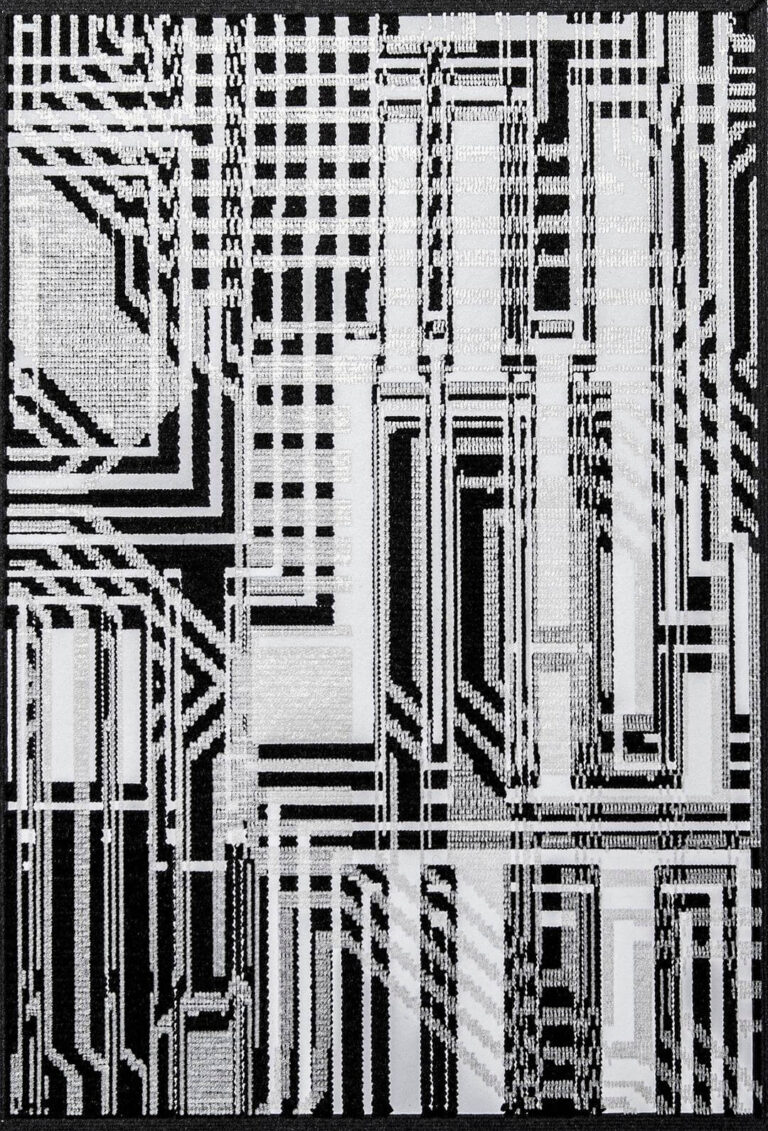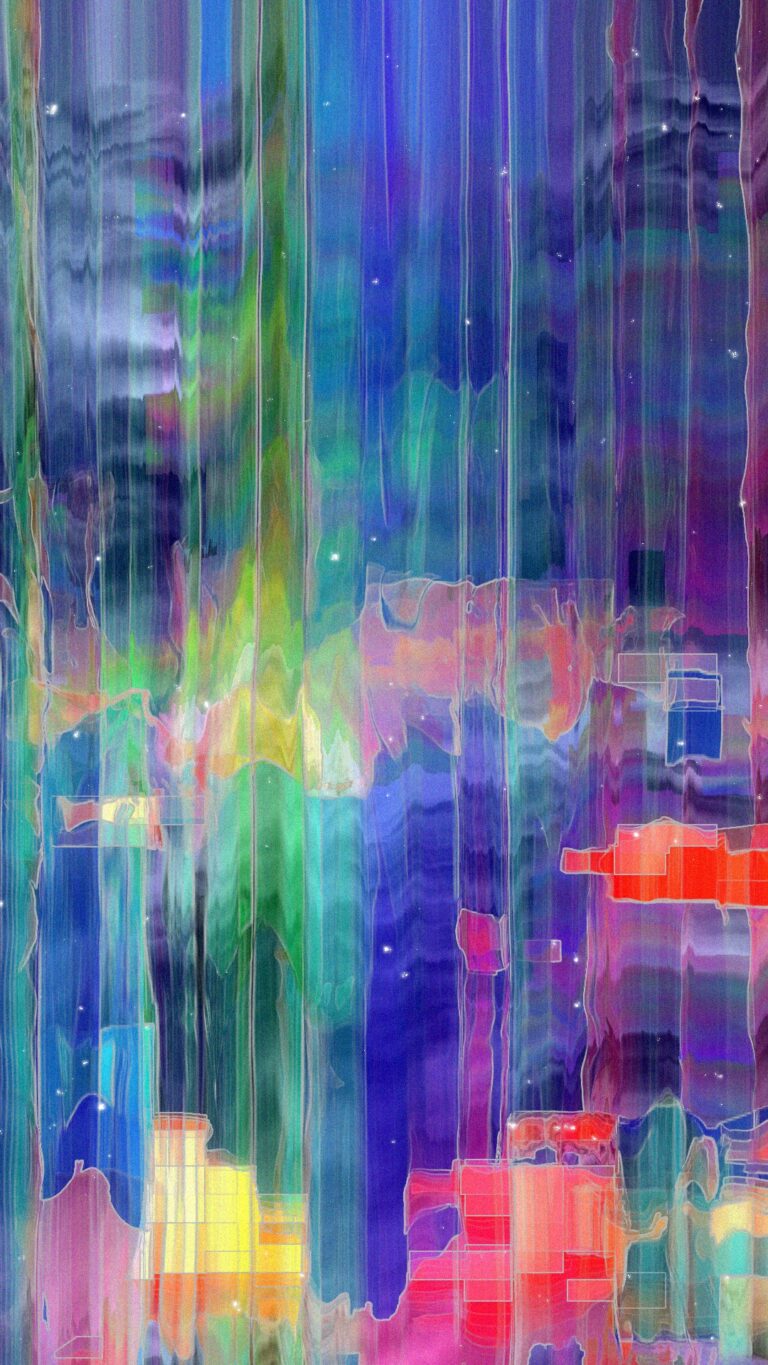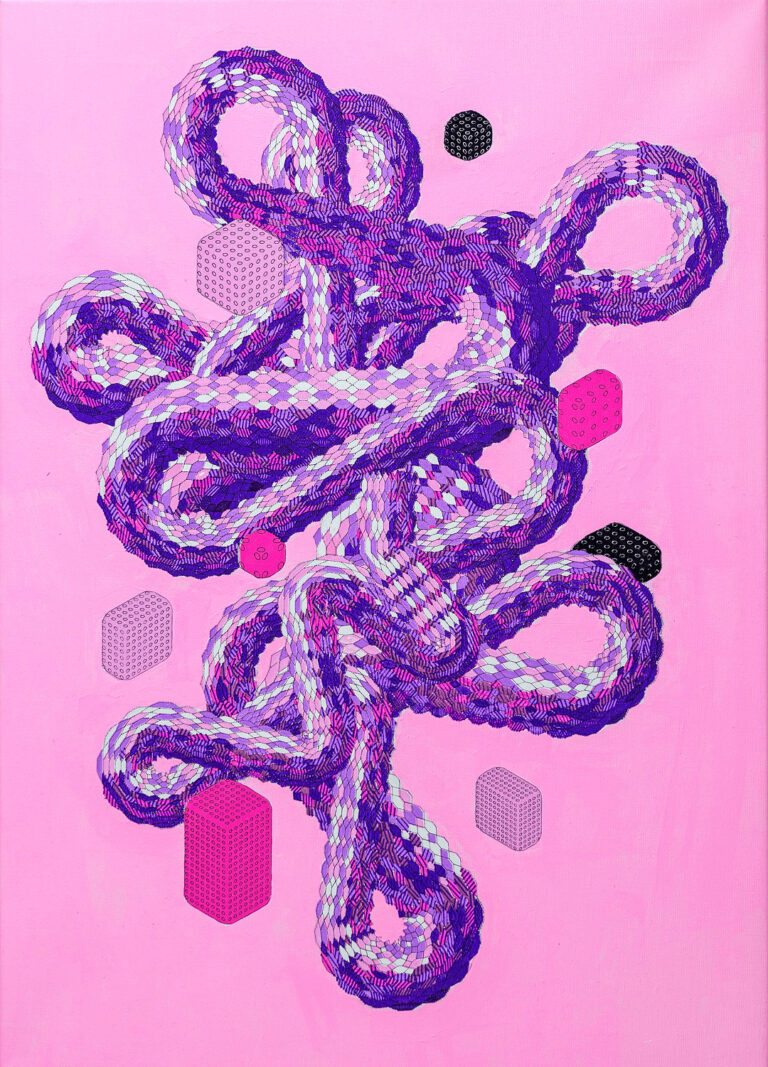
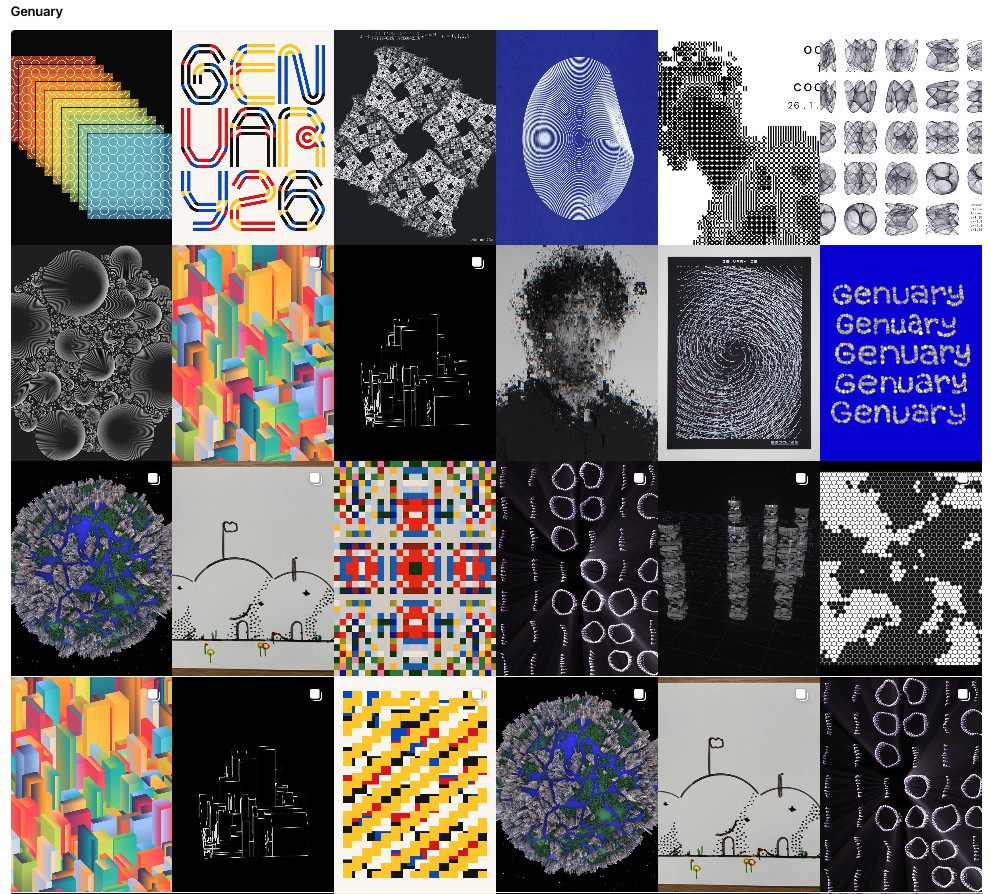
Every January, something special happens in the creative coding world. Thousands of artists, designers, and curious coders come together for Genuary — a month-long challenge to create generative art based on daily prompts. There are no judges, no prizes, and no pressure. Just 31 days of making art with code.
Whether you’re a seasoned creative coder or someone who’s never written a line of code, Genuary is for you. And if you’ve been seeing #genuary all over your feed and wondering what it’s about, you’re in the right place.
How Genuary Works
The concept is simple. Every day in January, there’s a new prompt — a theme or constraint to inspire your creation. “One color, one shape.” “Fibonacci forever.” “Recursive grids.” You interpret the prompt however you want, write some code to generate visuals, and share your work with the community using hashtags like #genuary, #genuary2026, or #genuary1 (for day one).
That’s it. No submissions. No judging panel. No prizes to win.
The name itself is a mashup of “Generative” and “January” — pretty straightforward. The challenge started in 2021, born out of the Generative Artists Club, a community of creative coders who wanted something like Inktober but designed for people who make art with algorithms instead of ink. The prompts for Inktober never quite clicked for programmers. “Draw a ghost” doesn’t translate well to code. But “use only polar coordinates”? Now we’re talking.
What makes Genuary different from other creative challenges is its philosophy. There’s no “Genuary police,” as the community likes to say. You can do all 31 prompts, a handful, or just one. You can interpret them loosely or follow them to the letter. You can even ignore them completely and just use January as an excuse to create. The point is to make something, learn something, and connect with others doing the same.
Genuary 2026 Prompts
Each year, the community releases a fresh set of 31 prompts. For 2026, they range from accessible starting points to technical deep-dives. Here’s a taste:
Day 1: One color, one shape — Perfect for beginners. Constraints breed creativity.
Day 3: Fibonacci forever — A mathematical classic that produces stunning spirals and sequences.
Day 8: A city — Open to interpretation. Could be realistic, abstract, dystopian, whimsical.
Day 18: Unexpected path. Draw a route that changes direction based on one very simple rule.
Day 31: GLSL day — A challenge for those ready to dive into shader programming.
You can find the full list at genuary.art/prompts. Don’t let the technical-sounding ones intimidate you — many participants use the harder prompts as learning opportunities, not performance tests.
Tools You Can Use for Genuary
One of Genuary’s core principles is that any tool is welcome. Seriously, any. The community doesn’t care if you’re using cutting-edge software or a decade-old framework. What matters is that you’re creating.
That said, some tools show up more often than others:
p5.js is probably the most popular choice, especially for beginners. It’s a JavaScript library designed to make coding accessible for artists. Everything runs in your browser — no installation needed. You can start with the p5.js web editor and have something visual on screen within minutes. If you’re new to this, check out our roundup of free tutorials and courses for p5.js beginners. Once you’re comfortable with the basics, explore the p5.js ecosystem — there are libraries for sound, 3D graphics, physics, and more.
Processing is the predecessor to p5.js and still widely used. It’s Java-based and runs as a desktop application. Many creative coding courses teach Processing, so there’s a massive library of examples and tutorials out there.
TouchDesigner takes a different approach — it’s node-based and visual, meaning you connect boxes instead of writing lines of code. It’s popular among VJs and artists working with real-time visuals, and it can produce stunning results without traditional programming.
But honestly, you can use Python, GLSL shaders, Blender, or even spreadsheets if that’s your thing. Some people have done Genuary with pure HTML and CSS. The medium doesn’t matter. The making does.
How to Participate (Even If You’re a Beginner)
Here’s the truth: you don’t need to be an expert. You don’t need to finish all 31 days. You don’t even need to share your work publicly if you don’t want to.
If you’ve never touched creative coding before, start small. Pick one prompt that sounds interesting. Open the p5.js web editor — it’s free and works in your browser with zero setup. Copy a simple example from the p5.js reference, tweak some numbers, and see what happens. That’s it. That’s a Genuary piece.
A few tips for newcomers:
Don’t aim for perfection. These are sketches, not masterpieces. The Genuary community celebrates experimentation and process over polish. Some of the most beloved posts are “happy accidents” — bugs that turned into beautiful features.
Start late if you need to. Genuary doesn’t care about your timeline. People post “Day 1” prompts on January 15th all the time. The hashtags stay active well beyond their assigned dates.
Look at what others are making. Browse #genuary2026 on Instagram, X, or Mastodon. You’ll see incredible variety — from simple geometric patterns to complex simulations. This isn’t about competing with anyone. It’s about being inspired by different approaches to the same prompt.
Share if you’re comfortable. Part of what makes Genuary special is the community aspect. When you post your work, you become part of a global conversation. Other artists might comment, offer tips, or just say they love what you made. But sharing is optional — plenty of people participate privately.
Why Join Genuary?
Beyond the creative challenge itself, there are real benefits to participating:
You’ll build skills. There’s no better way to learn creative coding than by doing it consistently. Even if you only complete a handful of prompts, you’ll come out the other side with more knowledge than you started with.
You’ll build a portfolio. By the end of January, you’ll have a collection of work. Some pieces might be rough sketches, others might surprise you. Either way, it’s material you can point to, share, and build on later.
You’ll connect with a global community. The generative art world is welcoming, and Genuary is a great entry point. People share resources, answer questions, and genuinely celebrate each other’s work. It’s one of the friendlier corners of the internet.
You’ll have fun. This might be the most important one. Genuary exists because making art with code is inherently enjoyable. It’s playful. It’s experimental. It’s the kind of creative practice that reminds you why you got interested in making things in the first place.
Ready to Try It?
Genuary is happening right now. The prompts are live at genuary.art, and the community is already sharing work across every platform.
You don’t need to commit to 31 days. You don’t need fancy software. You don’t need permission.
Open the p5.js web editor, pick a prompt, and start making. Even if it’s just circles on a screen, you’re part of something. Welcome to Genuary.