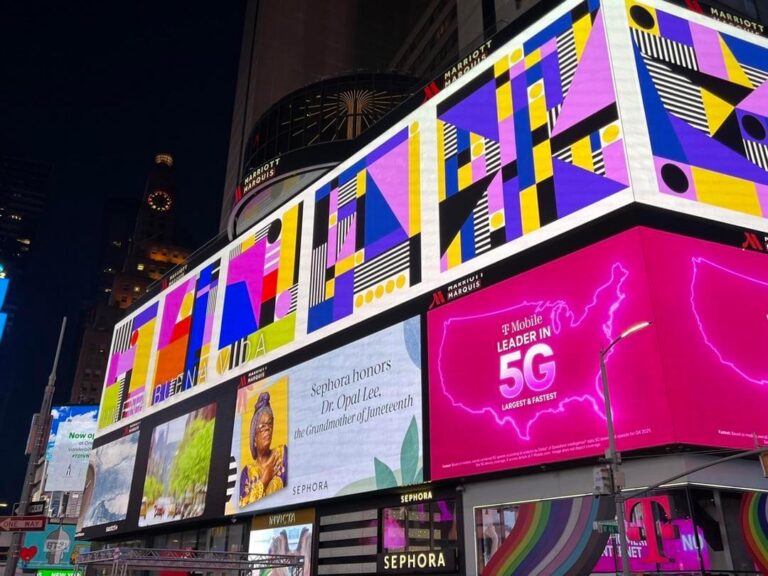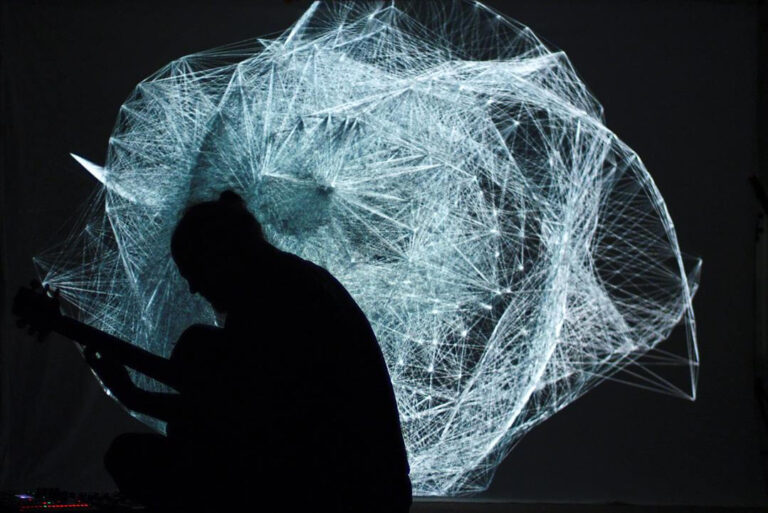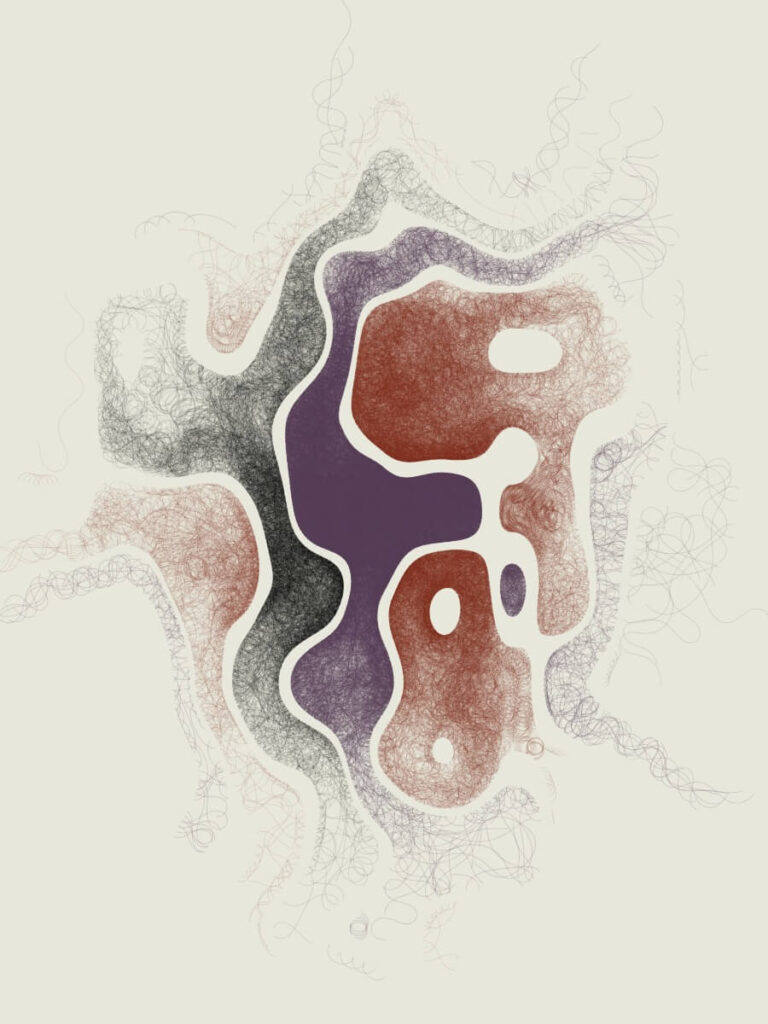
I want the audience to be more than just observers; I want them to be an actual part of the art. I aim to provide an experience where people can get fully immersed and enjoy the art.
ARTIST BIO
Myungwon Choi is a Technical Artist, originally a 3D Motion Graphic Designer, who focuses on the intersection of technology and art. His work centers on creating intuitive and novel experiences using real-time game engines. Rather than abstract concepts, he focuses on tangible objects and how they interact with the audience. He finds great satisfaction in achieving high-quality visuals that run seamlessly in real-time. His goal is simple: to create works that are “beautiful and surprising.” He builds interactive systems so that the audience can simply engage with and enjoy the visual experience.
- Instagram: dding_one
- X: dding_one
- Support Ko-fi: https://ko-fi.com/myungwonchoi
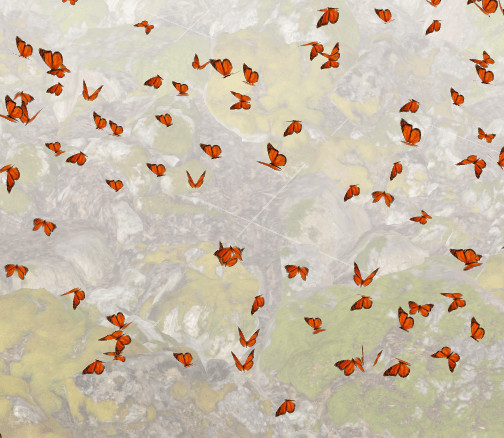
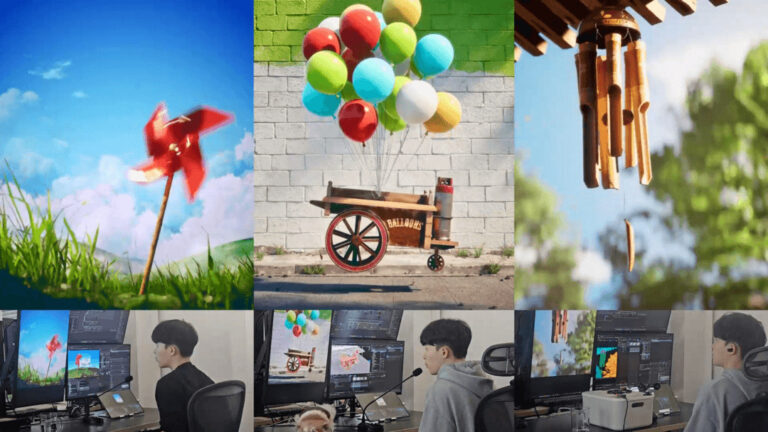
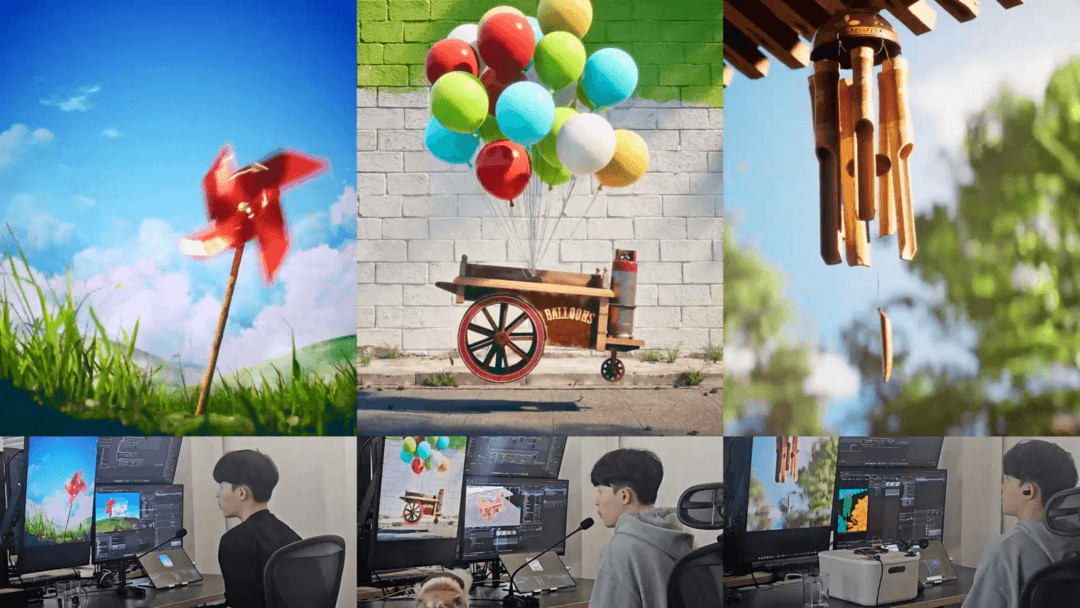
I’ve created interactive art piece utilizing wind. The pinwheel spins with the wind, the balloon inflates and rises as the wind blows, and the windchimes sway and change their sound with the wind. Through this piece, I’ve explored different ways of expressing wind, allowing the viewer to directly feel and experience the movement of the wind as it reacts in real-time.
What Is one belief, insight, or idea that guides your creative process?
I want the audience to be more than just observers; I want them to be an actual part of the art. This guides me to combine intuitive interaction with high-end visuals. I aim to provide an experience where people can get fully immersed and enjoy the art.
Can you tell us how you discovered Mixed art and what drew you into it?
Working as a 3D motion designer, I’ve always had a thing for coding to make my life easier, which naturally led me into the world of generative art. What I love most is the scalability—once you nail the logic, you can push out endless high-quality variations.
What do you think defines your style or creative approach, and how did you arrive at that identity?
I don’t limit myself to specific styles; I just enjoy mixing technologies that excite me. My priority isn’t showing off technical skills, but creating convincing visuals. When a world feels believable, the audience can stop questioning and truly lose themselves in the experience.
How does a project usually begin for you? Do you have a creative ritual or structure you follow?
I’m constantly diving into tech insights, and whenever something grabs my interest, I start by asking, What kind of visual experience can I build with this? I take technical bits and connect them with artistic concepts. For me, tech usually comes first, and the creative direction follows.
What tools or technologies do you use most, and how do they influence your visual language?
I mainly use Unreal Engine to get offline-level quality in real-time. Using Blueprints, I can prototype interactive elements instantly without complex coding. This speed makes my process more experimental, letting me focus less on technical hurdles and more on refining the visuals.
Do you feel there Is a strong generative art scene? What would you like to see evolve in it
AI has given designers unprecedented freedom to experiment. As technical barriers lower, I expect the focus to shift toward how we curate and combine tools. I hope the scene evolves so an artist’s unique perspective and visual persuasion become more important than the technology itself.
What advice would you give to someone who wants to start creating generative art but doesn’t know where to begin?
I recommend a top-down approach. Start a project first and learn only what you need to get it done. It’s much more efficient than trying to master everything at once. Completing small projects keeps the process fun and helps you stay consistent without burning out.
Which artists or creators do you think are doing remarkable work and deserve much more recognition?
I’d like to shout out my colleague, Jack. He combines technical depth with a great sense of visuals.