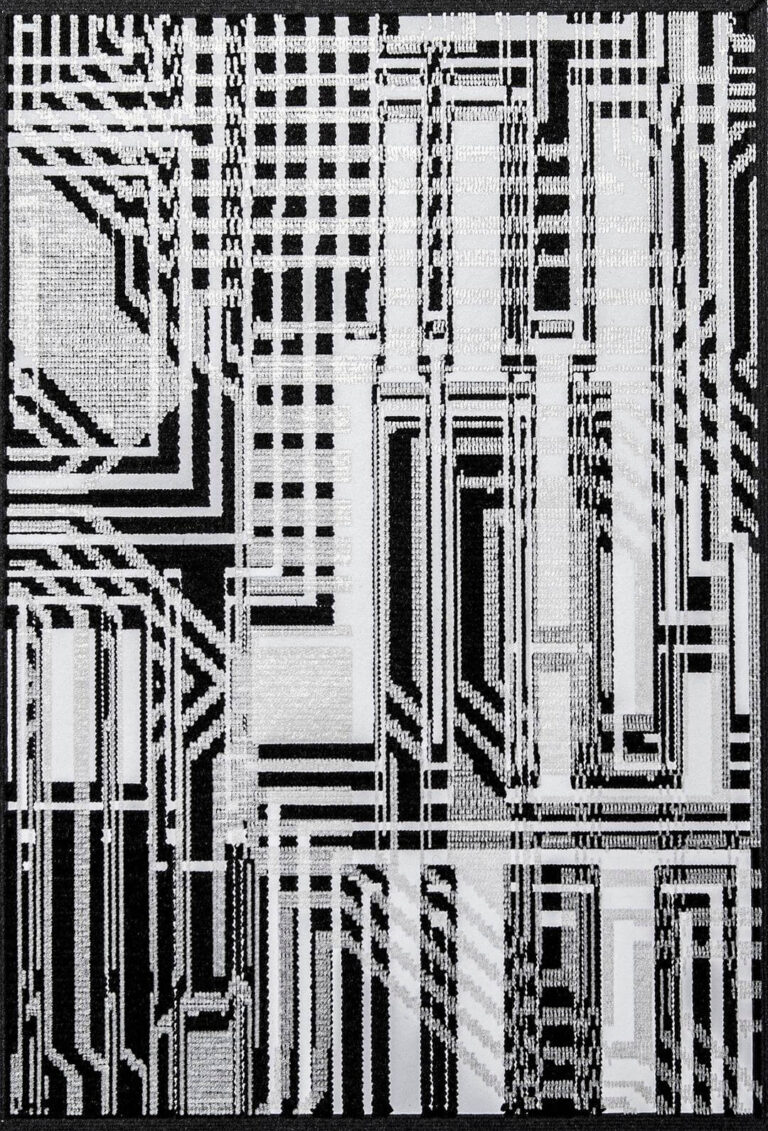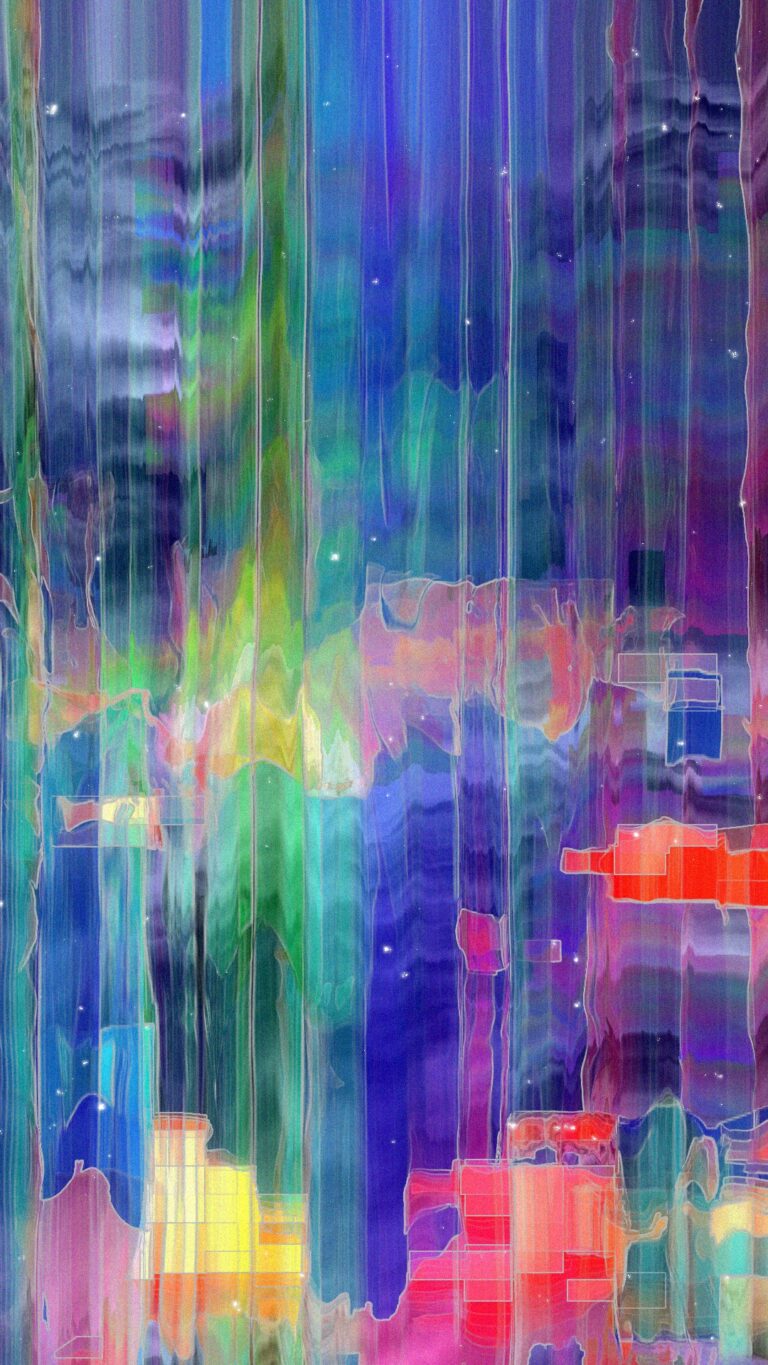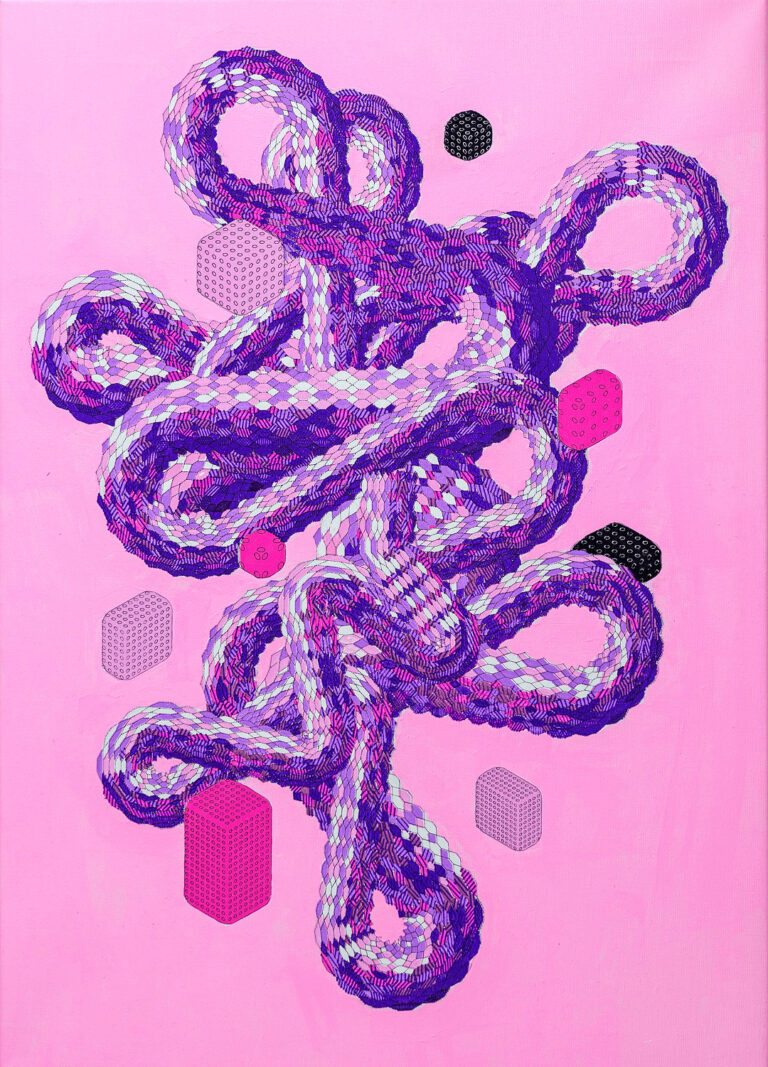

I believe complexity can emerge from simple rules. My process begins with algorithms that evolve through repetition and variation. I see code as a collaborator introducing unpredictability and rhythm—a dialogue between order, randomness, and intuition.
ARTIST BIO
Elio Ramos Colón, known by his artistic alias garabatospr, is a Puerto Rican artist and professor whose generative work explores the intersection of mathematics, code, and visual form. Using tools like p5.js, Three.js, and custom shaders, he creates algorithmic systems that reveal the balance between mathematical precision and visual intuition. His practice bridges education and creativity, promoting computational art and data visualization as expressive and transformative disciplines.
- Web: https://openprocessing.org/user/118807/
- Instagram: garabatospr
- X: garabatospr
- Reddit: u/mecobi


What Is one belief, insight, or idea that guides your creative process?
I believe complexity can emerge from simple rules. My process begins with algorithms that evolve through repetition and variation. I see code as a collaborator introducing unpredictability and rhythm—a dialogue between order, randomness, and intuition.
Can you tell us how you discovered Mixed art and what drew you into it?
I discovered generative art through Processing and p5.js. With a background in physics and computational sciences, I was drawn to the beauty of systems shaped by logic and chance. The work of the Argentinian generative artist Manolo Gamboa Naon deeply influenced my creative direction.
What do you think defines your style or creative approach, and how did you arrive at that identity?
My style is defined by the balance between order and unpredictability. I build systems from mathematical rules and let them evolve beyond control. My background in physics and computational sciences shapes this dialogue between structure, randomness, and emergence.
How does a project usually begin for you? Do you have a creative ritual or structure you follow?
A project often begins with a simple rule, equation, or visual curiosity. I start by coding small experiments and observing their behavior. Exploration replaces planning—patterns emerge through iteration until structure and rhythm find their own balance.
What tools or technologies do you use most, and how do they influence your visual language?
I work primarily with p5.js, Three.js, and GLSL shaders. These tools let me translate mathematical ideas into dynamic visuals. Their flexibility encourages experimentation with geometry, motion, and color, shaping a visual language grounded in code and exploration.
Do you feel there Is a strong generative art scene? What would you like to see evolve in it
In Puerto Rico, there isn’t yet a strong generative art scene. Most creative work still happens individually. I’d like to see more spaces for collaboration, exhibitions, and education—places where artists, coders, and students can explore creative coding together.
What advice would you give to someone who wants to start creating generative art but doesn’t know where to begin?
Pick a tool and start small—I strongly recommend Processing or p5.js. Begin with simple shapes, play with color and motion, and let curiosity guide you. Don’t aim for perfection; experiment, iterate, and share your work. That’s how learning truly happens.
Which artists or creators do you think are doing remarkable work and deserve much more recognition?
I admire the work of Japanese generative artist Okazz, whose approach to motion, rhythm, and minimalism resonates deeply with me. His ability to find emotion in structure and code reflects the kind of quiet precision I aspire to in my own creative process.