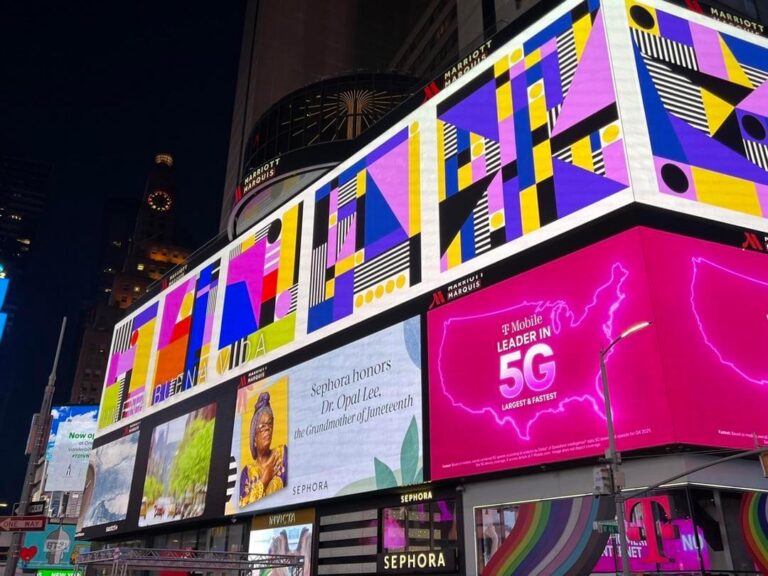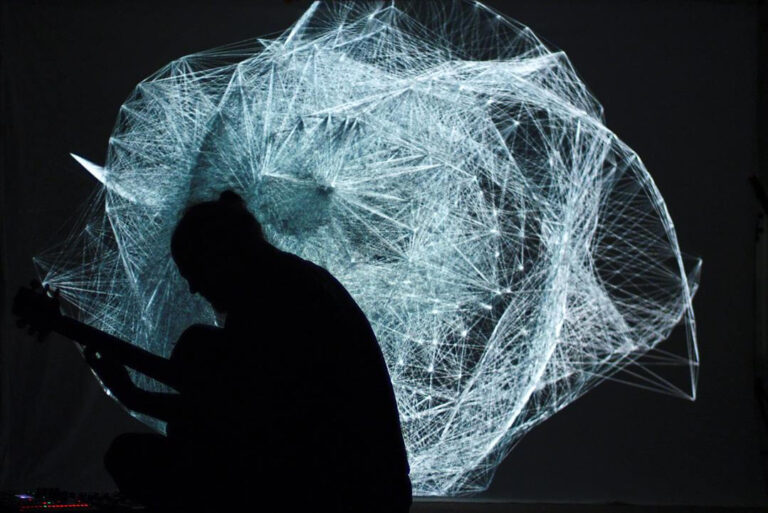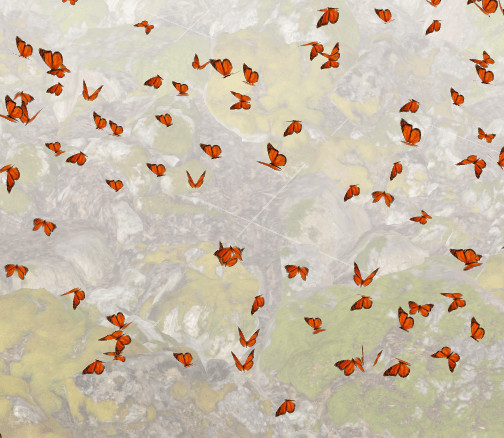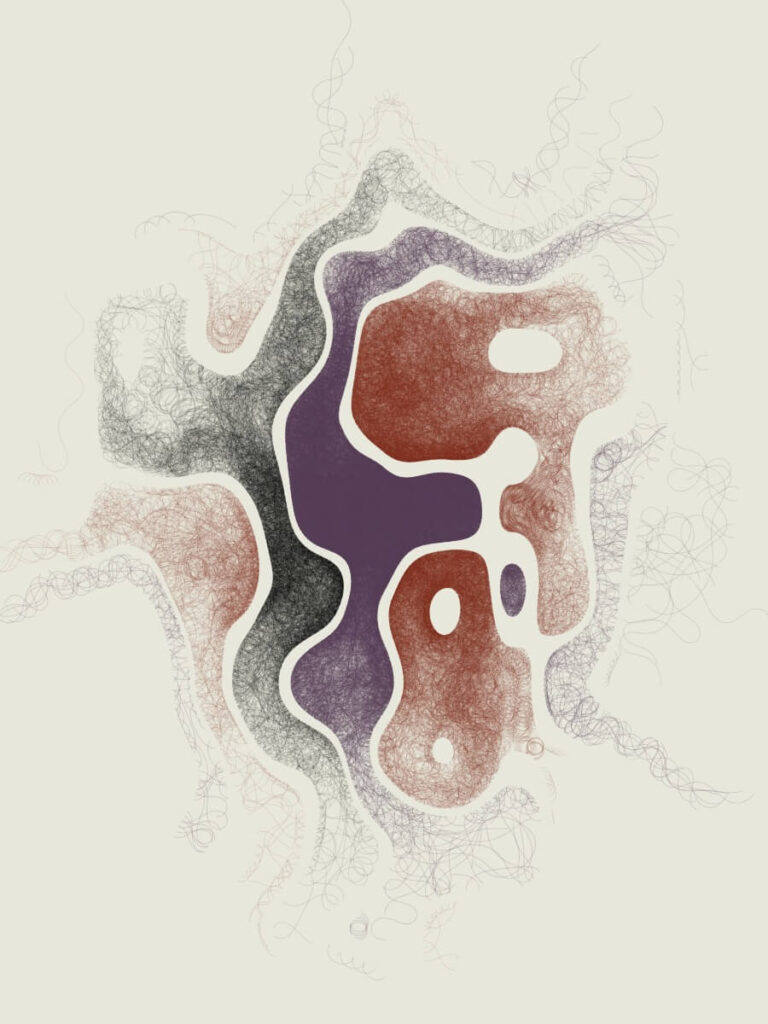
A piece has to resonate emotionally to me before anything else. It must communicate something beyond technique and continue to feel meaningful every time I return to it.
ARTIST BIO
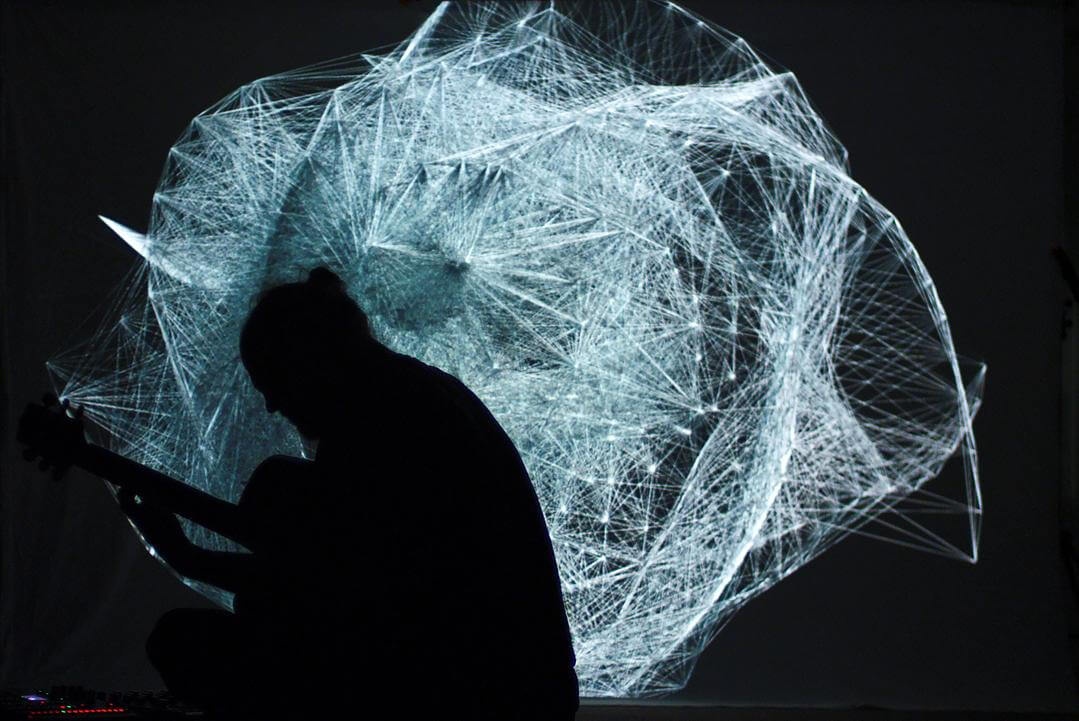
The Noise Diary is the audiovisual work of artist & composer, Adam Clark. His work merges generative visuals, sound design, realtime systems, and cinematic atmosphere into immersive audiovisual experiences shaped by motion, texture, and emergence. Drawing from backgrounds in music composition, programming, visual effects, and experimental film, he creates evolving environments where sound and image influence one another as a unified system. His projects span live performances, installations, commercial campaigns, and large-scale touring visual productions. Also part of The Noise Diary is Gretchen McNelis, who contributes musically, in performance, and is the vocalist, & lyricist.
- Web: thenoisediary.com
- Instagram: @thenoisediary
- Tiktok: @thenoisediary
- X: @thenoisediary


What Is one belief, insight, or idea that guides your creative process?
A piece has to resonate emotionally to me before anything else. It must communicate something beyond technique and continue to feel meaningful every time I return to it.
Can you tell us how you discovered Mixed art and what drew you into it?
I experimented with generative visuals & sound programming on a Commodore 64 as a kid, & later via Flash Actionscript. I was introduced to TouchDesigner while working on an immersive dome project for Super Bowl VII. For me, generative art has always felt like a natural counterpart to musical expression.
What do you think defines your style or creative approach, and how did you arrive at that identity?
As a lifelong musician, artist & programmer, I’m compelled by abstract use of those disciplines to convey emotional weight & evoke memory. I’m drawn to natural & degraded forms, and the tension between noise, electronics, and acoustic folk instruments, a balance of construction & collapse.
How does a project usually begin for you? Do you have a creative ritual or structure you follow?
I see or hear strong impressions of the work internally first. I create the core elements initially, then improvisation & intuition gradually take over. I often revisit key pieces to recalibrate to a larger arc, and structure my days around the hours I’m most creatively productive.
What tools or technologies do you use most, and how do they influence your visual language?
My work is primarily created in TouchDesigner, often incorporating GLSL, python, custom generative processes and video. The real-time nature of these tools encourages experimentation, interaction, improvisation, and emergent behavior, all central to my visual approach.
Do you feel there Is a strong generative art scene? What would you like to see evolve in it
There seems to be a growing generative art scene. What interests me most is seeing artists who take the medium beyond technical novelty towards work with emotional, aesthetic, and psychological depth. I always appreciate artists with a distinct voice and point of view.
What advice would you give to someone who wants to start creating generative art but doesn’t know where to begin?
Embrace and prioritize experimentation as a discipline, follow obsessions, break things. Take the time to understand why things behave the way they do. Technical skills matter, but developing a personal artistic language matters more.
Which artists or creators do you think are doing remarkable work and deserve much more recognition?
Here’s a mix of various artists I enjoy and appreciate: Damien Looney(@damienlooney), (Marcin Pospiech (@reinfected.me), Ricardo Ponce(@pixel.flux), Yoshi Sodeoka (@yoshisodeoka), Mini UV (@_mini_uv), Jan Erik Waider(@northlandscapes) Esao Andrews(@esao), Maarten Vos(@maartenvos_) Charlotte Kemp Muhl (@charlottekempmuhl)