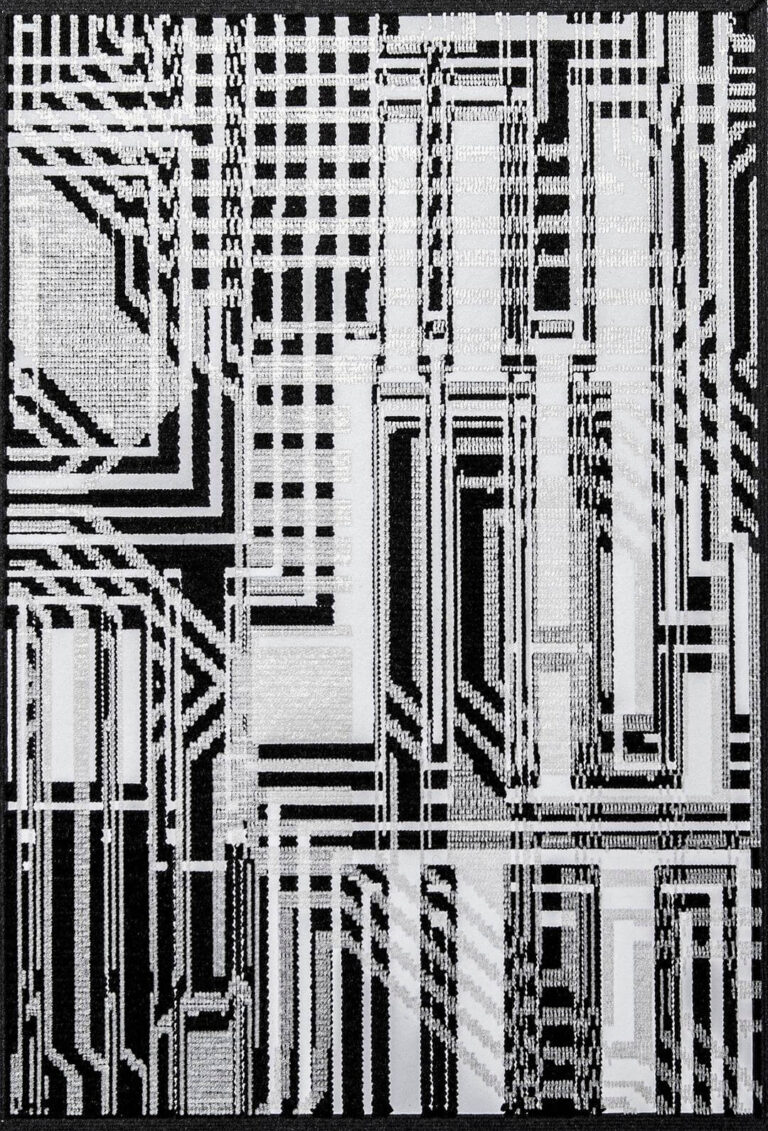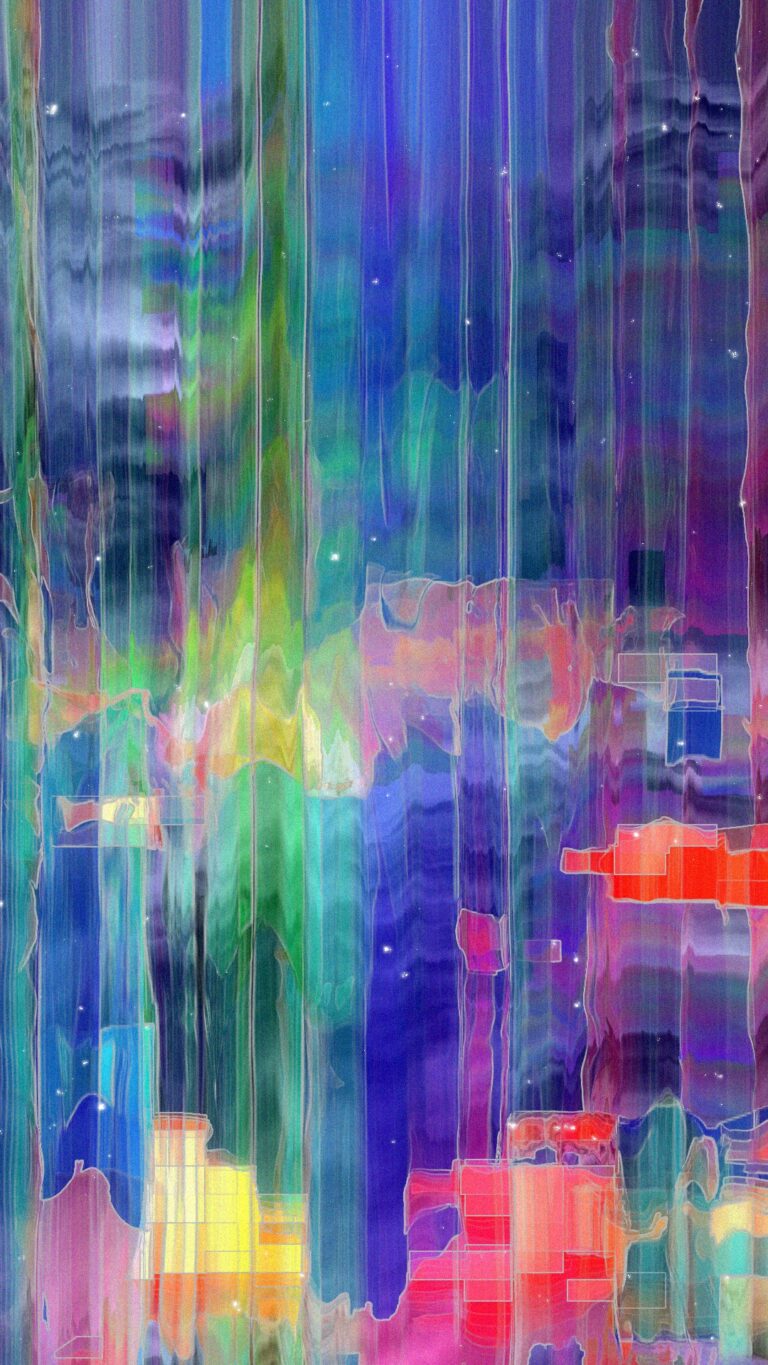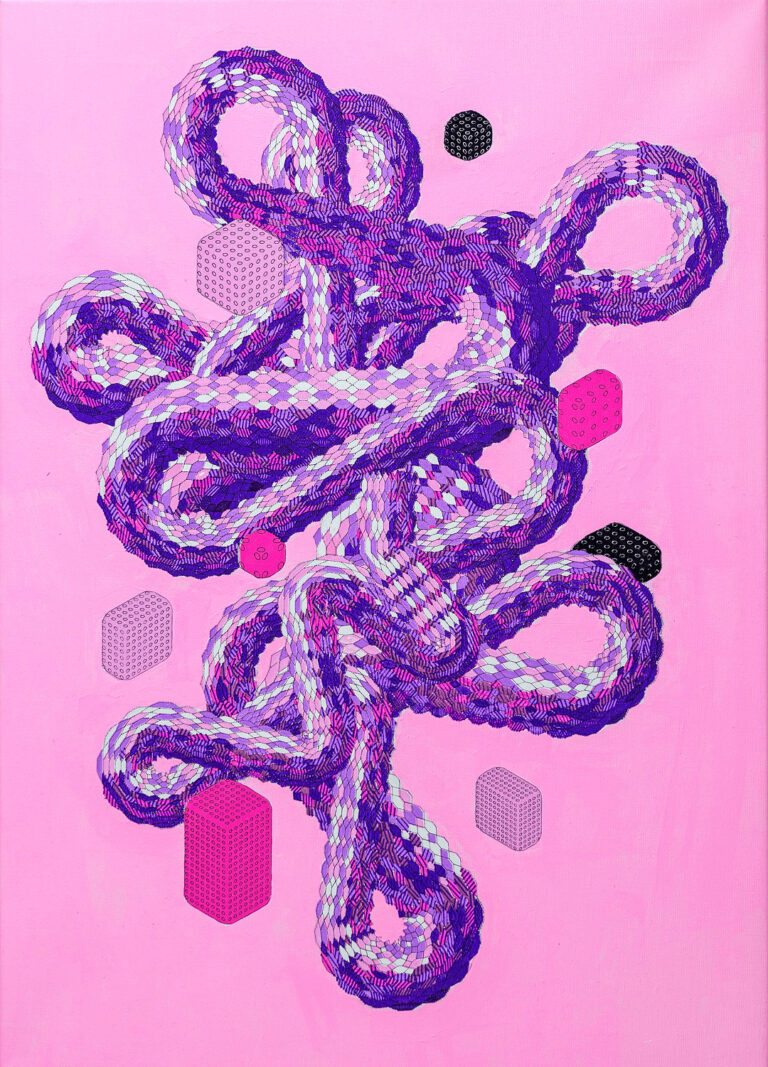
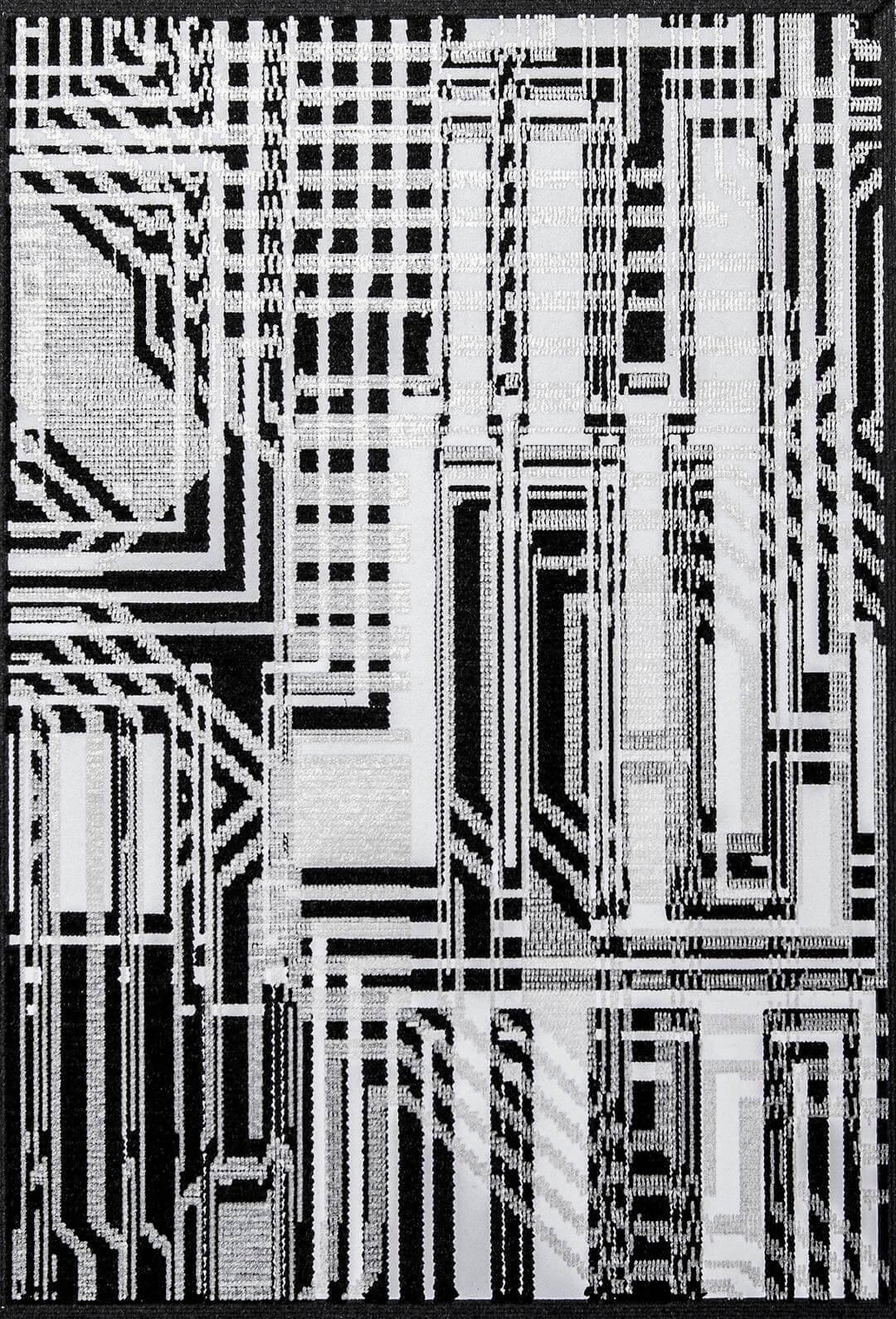
I don’t believe creativity starts with an idea, but great ideas can emerge during the creative process. I believe in the urge for visual exploration, the desire to play and discover, guided by the artistic medium itself, the materials, and their limitations.
ARTIST BIO
Lenia Mascha is a Greek architect and artist living and working in Vienna, Austria. In her work, she engages with creative computation and robotic production techniques, exploring their far-reaching potential across architecture, design, and the arts.
She positions composition and digital craftsmanship at the heart of her creative practice. Her work with algorithmic design and machine drawing builds on the realization of the shared nature between machine drawing and the art of weaving. Beyond metaphor and inspiration, her artistic approach draws parallels with a craft understood as the historical predecessor of both algorithmic art and automation.
Drawing, like weaving, transitions with the use of automated machines from handcraft to mechanized craft, revealing its rule-based logic of composition. By bringing textile thinking to the fore, further critical trajectories on the intertwined relationship of technology and the arts, mathematics and craftsmanship, labor and gender emerge.
Lenia studied architecture in Berlin, Vienna, and Thessaloniki and holds a master’s degree in Architecture and a postgraduate degree in Urban Strategies. She has taught architectural design and computation at the University of Applied Arts Vienna and the University of Innsbruck.
Additionally, she has organized numerous computational design workshops and has conducted artistic research on the acoustic potential of building skins and sound ornaments. As a practicing architect, she has worked for more than 12 years on the design and realization of internationally awarded civic buildings.
- Web: www.leniamascha.com
- Instagram: leniamascha


What Is one belief, insight, or idea that guides your creative process?
I don’t believe creativity starts with an idea, but great ideas can emerge during the creative process. I believe in the urge for visual exploration, the desire to play and discover, guided by the artistic medium itself, the materials, and their limitations. Reflecting on the work within a cultural context can lead to valuable realizations that guide artists further. In this sense, ideas are an afterthought of the creative process, and not the initiator of it.
Can you tell us how you discovered Mixed art and what drew you into it?
During my studies in architecture. I am part of a generation of architects who learned to draw with rapidographs and by hand, then rushed to the computer, learning software after software for 3d modeling and paperless compositions, all within a few years. During this period, I also moved from drawing figuratively to appreciating abstraction. My work with algorithms and digital fabrication somehow all came together when I first saw a drawing machine work, and this is how I was drawn into my artistic practice.
What do you think defines your style or creative approach, and how did you arrive at that identity?
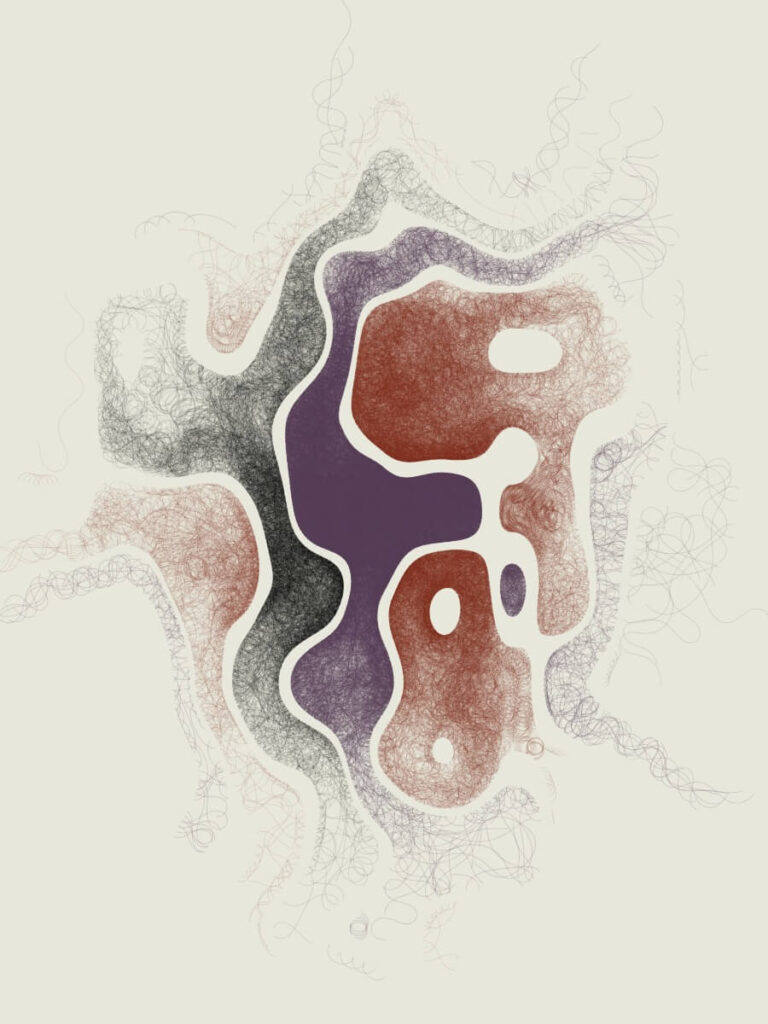
Textile thinking. Reflecting on generative design for pen plotting, looking at the robotic arm move along a Cartesian grid, I felt that my work (if not most pen-plotter artists’ work) resembled more and more a textile structure. I chose to enhance this quality and pay attention to the moments it becomes more evident. Of course, there is also the legacy of many practitioners in this direction that carries my speculations further. I find myself on very fruitful ground for artistic exploration, so I am thinking of staying here for a while.
How does a project usually begin for you? Do you have a creative ritual or structure you follow?
I have a creative principle; I never start from scratch. Procedural design allows me to do that. Algorithms can be developed further, and parameters can be tweaked endlessly, but I never need to build them from the beginning. This way gives me limits to operate, and keeps the DNA of the work the same. In other words, the project always starts by opening the previous file, saving it as a new file, and moving on.
What tools or technologies do you use most, and how do they influence your visual language?
I work with SideFX Houdini, Rhinoceros 3D, and a small desktop Robotic Arm. They influence my design the same way the markers and the paper I use do.
Do you feel there Is a strong generative art scene? What would you like to see evolve in it
Online presence and social media for showcasing art and connecting to other artists have empowered a sense of creative community and made evident that there is a rich international scene of generative art and machine drawing. The more accessible and uncensored these platforms become, the better they can benefit artistic communities and lead to a more inclusive art world.
What advice would you give to someone who wants to start creating generative art but doesn’t know where to begin?
I would suggest picking one algorithmic tool and understanding how to set up a generative system. I would also suggest looking at algorithmic art before the use of computers. Geometric art, natural systems, and textile design are fields that have advanced generative art long before the emergence of computer arts, and they are always a humble reminder of how much artistic depth has been achieved without today’s computational power.
Which artists or creators do you think are doing remarkable work and deserve much more recognition?
It’s fair to say that all emerging artists deserve attention, and there are many I discovered in recent years that I admire a lot. I will use the opportunity though to highlight an emerging Viennese scene where I am based; fellow artists Daniela Kröhnert and Liz Melchor are producing very authentic work with drawing machines. Also, OMG | Objects Mathematically Generated are exploring further applications of generative design into design objects.